 Cookie preferences


AI in Advertising: Ethics, Deepfakes and Regulation in Hong Kong
Want to save time?
Summarize this article in seconds with AI
AI has handed advertisers powers that used to belong to studios: generate a face, clone a voice, fabricate a scene. Most uses are harmless and useful. A few are not, and the line between clever and deceptive is thinner than it looks. A synthetic spokesperson is fine; a deepfake of a real person who never agreed to it is a lawsuit and a reputation problem.
This guide lays out the ethical and legal issues around AI in advertising, with a Hong Kong lens, so you can use these tools confidently without walking into trouble. It is a practical overview, not legal advice.
Plan AI-era campaigns that stay on the right side of the line
Table of Contents
- Deepfakes and likeness rights
- Disclosure and transparency
- Bias and fairness
- Copyright and ownership
- The Hong Kong regulatory picture
- A do and don't checklist
- FAQ
Deepfakes and likeness rights
The sharpest risk is using a real person's face or voice without permission. AI makes convincing deepfakes cheap, and the temptation to borrow a celebrity or recreate a public figure is obvious. It is also dangerous. Using someone's likeness without consent can breach their rights, mislead the public, and destroy trust the moment it is exposed.
The rule is straightforward: if you did not create it and do not have the rights to it, do not put it in an ad. That covers real people, but also the trickier middle ground of AI voices that sound like a known artist or synthetic faces trained on identifiable individuals. Consent and licensing are not optional.
%20(12).jpg)
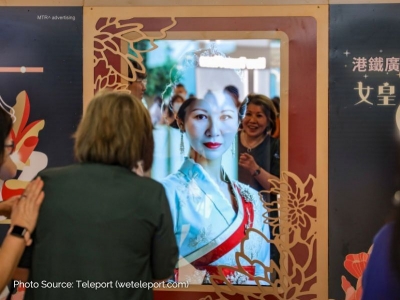
AI is using to strength the retro Hong Kong elements in Dah Sing Insurance's MTR campaign.
Disclosure and transparency
The second issue is honesty about what is real. As AI content becomes indistinguishable from the genuine article, audiences and regulators increasingly expect to be told when something is synthetic, whether that is an AI presenter, a virtual influencer or a generated testimonial.
Fake testimonials are the clearest trap. A generated review or a synthetic customer presented as real is deceptive, full stop. Disclosure protects you: labelling AI content as AI is rarely a problem, while hiding it invites both backlash and regulatory attention. When unsure, err toward telling people.
Bias and fairness
AI systems learn from data, and data carries bias. In advertising, that can show up as targeting that unfairly excludes groups, or generated creative that leans on stereotypes because the training data did. Beyond the ethics, biased targeting can stray into discrimination, which carries legal risk.
The practical guard is human review. Check who your AI targeting includes and excludes, and check whether your generated creative represents people fairly. A model will happily reproduce a stereotype without knowing it did.
Copyright and ownership
Who owns an AI-generated image or line of copy, and can you use it commercially? The honest answer is that the law is still catching up, and it varies by tool and jurisdiction. Some AI outputs may not attract copyright protection the way human work does, and some tools grant commercial rights while others do not.
Two practical steps: read the licensing terms of every tool you use for commercial work, and be careful that AI outputs do not reproduce protected material from their training data. If a generated image looks a lot like an existing artwork or brand, treat that as a red flag.
The Hong Kong regulatory picture
Hong Kong does not yet have a single AI-specific advertising law, but that does not mean AI advertising is unregulated. Existing rules apply.
The Personal Data (Privacy) Ordinance (PDPO) governs any personal data used to train models, build audiences or personalise ads, and the Privacy Commissioner for Personal Data has issued guidance on the ethical use of AI. Consumer protection and misrepresentation rules apply to claims made in ads, regardless of whether a human or an AI produced them. And the general law on likeness, defamation and intellectual property applies to AI content just as it does to anything else.
The direction of travel globally is toward more AI-specific rules, so building good habits now is cheaper than retrofitting them later. For a related view on how the industry itself is changing, our piece on whether AI will replace advertising is a useful companion, and for the OOH side, our guide to OOH regulations in Hong Kong covers the offline rules.
A do and don't checklist
| Do | Don't |
|---|---|
| ✓ License or create the likenesses you use | ✗ Deepfake real people without consent |
| ✓ Disclose AI presenters and content | ✗ Pass off synthetic testimonials as real |
| ✓ Review targeting and creative for bias | ✗ Assume the model is neutral |
| ✓ Check tool licences for commercial use | ✗ Run outputs that mimic protected work |
| ✓ Comply with the PDPO on any data use | ✗ Repurpose personal data without consent |
| ✓ Keep a named human accountable | ✗ Blame the AI when something goes wrong |
The through line is accountability. AI is a tool, and you are responsible for what it produces in your name. If you want campaigns that use AI creatively while staying compliant and brand safe, submit a brief and we will help you plan them. Our online advertising guide covers the wider digital context.
Summary Table
I am text block. Click edit button to change this text. Lorem ipsum dolor sit amet, consectetur adipiscing elit. Ut elit tellus, luctus nec ullamcorper mattis, pulvinar dapibus leo.
FAQ
1. Is it legal to use deepfakes in Hong Kong advertising?
Using a real person's face or voice without consent can breach their rights and mislead the public, and existing laws on likeness, misrepresentation and privacy apply. If you did not create it or licence it, do not put it in an ad. This is not legal advice.
2. Do I have to disclose AI-generated content in ads?
It is strongly advisable and increasingly expected. Labelling AI content is rarely a problem, while hiding synthetic presenters or fake testimonials is deceptive and invites backlash and scrutiny.
3. Does Hong Kong have AI advertising laws?
There is no single AI-specific advertising statute yet, but existing rules apply: the PDPO for personal data, consumer protection rules for claims, and general law on likeness and intellectual property. The Privacy Commissioner has issued guidance on ethical AI use.
4. Who owns AI-generated ad creative?
It depends on the tool and jurisdiction, and the law is evolving. Some outputs may not attract copyright the way human work does, and commercial rights vary by tool. Always check the licence before using outputs commercially.
5. Can AI targeting be discriminatory?
Yes, if the underlying data is biased. Targeting that unfairly excludes groups or creative that leans on stereotypes carries both ethical and legal risk. Human review of who is included and how people are represented is the practical safeguard.
6. Who is responsible when AI gets it wrong?
You are. AI is a tool, and the brand running the ad is accountable for what it produces. Keep a named human in charge of review and approval rather than treating the AI as an excuse.




 Shopping Mall Advertising in Hong Kong: Formats, Footfall and Rates
 WeChat Advertising in Hong Kong: Formats, Costs and How to Set It Up
 Programmatic DOOH in Hong Kong: How It Works and What It Costs
 Cantonese, Mandarin or English: Choosing Your Ad Language in Hong Kong
 AI in Advertising: Ethics, Deepfakes and Regulation in Hong Kong
 Understanding YouTube Advertising Costs in 2025
 The Most Widely-Read Magazine and Newspaper in Hong Kong
 Top Social Media Platforms in Hong Kong 2025 | Usage Trends & Marketing Insights
 OOH /DOOH advertising in Hong Kong: Formats and Rates (2025 Update)
 How much does LinkedIn Advertising Cost? (2025 Update)
