 Cookie preferences


Cantonese, Mandarin or English: Choosing Your Ad Language in Hong Kong
Want to save time?
Summarize this article in seconds with AI
In Hong Kong advertising, picking your language is actually a positioning decision instead of a production decision. Imagine launching a massive billboard campaign in a local district, only to realise the copy feels stiff, foreign or completely disconnected from the people walking past, a brand might paste a direct English translation onto a residential billboard, locals may ignore the advertisement easily. The solution is straightforward: you must match the language to the audience and the environment. Before you submit a media brief, you need to get this choice right.
The language landscape, honestly
Hong Kong is a city of three spoken languages and two written scripts. According to the Census and Statistics Department, Cantonese is the usual spoken language for over 88 percent of the population. English and Mandarin follow, serving specific communities and business needs.
But here is the concept many international marketers miss: what people speak is not exactly what they read. In Hong Kong, the default written script is Traditional Chinese. However, there is a massive difference between Standard Written Chinese and Spoken Cantonese. Standard Written Chinese is formal and grammatically aligns with Mandarin. Written Cantonese captures the exact vocabulary and slang of the spoken streets.
Written Chinese: standard Chinese vs written Cantonese
Choosing between formal standard Chinese and written Cantonese changes your entire brand voice. When you use written Cantonese, your traditional Chinese ad copy reads as authentic, warm and highly local. This approach works brilliantly for food and beverage brands, retail promotions, entertainment and youth targeting campaigns. It tells the reader that you are one of them.
On the other hand, using slang in the wrong category looks cheap or juvenile. For banking, insurance, healthcare and luxury brands, Standard Written Chinese is not negotiable. It projects stability, professionalism and universal respect. Choosing the language before the design ensures your tone matches your product.
When English is the right choice
English holds a unique place in the market. It is the perfect choice for expat focused services, business to business communications, financial institutions and luxury brands where an international provenance is the main selling point.
However, there is a trap. Running pure English creative executions in a mass market campaign often reads as though the brand simply did not bother to localise. It alienates the local majority. If you want mass appeal, bilingual advertising hong kong strategies are much more effective.
Simplified Chinese: when it helps and when it backfires
Simplified Chinese marketing in Hong Kong is essential when your target audience consists of visitors from the mainland. It works exceptionally well in visitor facing placements. Think about border corridors, the High Speed Rail terminus, the airport and major tourist shopping districts. However, you should pay attention that not every formats accept the use of simplified Chinese.
But placing that exact same Simplified Chinese asset in a deeply residential transit station is a severe positioning error. It signals to local residents that the product is not for them. Segment your media buys carefully. You can learn more in our upcoming guide on marketing to mainland visitors.
Mandarin in broadcast and video
When producing video or broadcast materials, audio and text must work together. If you are targeting locals, a Cantonese voiceover is mandatory. If you are speaking to tourists, Mandarin is the way to go.
For campaigns that absolutely must serve both audiences, the dual version approach is standard practice. You record two separate voiceovers. Often, marketers will use Traditional Chinese subtitles across both, or generate two separate video files to ensure maximum relevance.
The channel by audience matrix
To make things easier, here is a breakdown of how to match your language choice to your media placement.
| Channel | Recommended Spoken Language | Recommended Script | Note |
|---|---|---|---|
| TV | Cantonese | Traditional Chinese | Broadcast standard for local networks |
| Radio | Cantonese | None | Tone and local slang matter immensely |
| Transit OOH | None | Traditional Chinese | Written Cantonese works well for retail |
| Border OOH | None | Simplified Chinese | Essential for mainland visitor corridors |
| Mall Media | None | Traditional Chinese | English often added for luxury brands |
| Social Media (Local) | Cantonese | Written Cantonese | Highly interactive and casual |
| Social Media (Mainland) | Mandarin | Simplified Chinese | Must match platform expectations |
| Search | None | Traditional Chinese | Capture local search intent accurately |
| Press | None | Standard Written Chinese | Formal tone required for print journalism |
Three Hong Kong campaigns and their language choices
Let us look at actual executions to see what these choices signal and whether they landed successfully.
.jpeg)
HSBC consistently strikes the right balance. In their wealth management campaigns, they use standard Traditional Chinese with sophisticated English phrasing, reinforcing their global banking authority. You can see more in our breakdown of the top 5 HSBC advertising campaigns in Hong Kong.
.jpeg)
McDonald's excels at written Cantonese. Their app promotion campaigns use local slang that feels incredibly natural to a young audience. This casual tone builds immediate affinity. Check out our list of the 5 best McDonald's ads for more details.
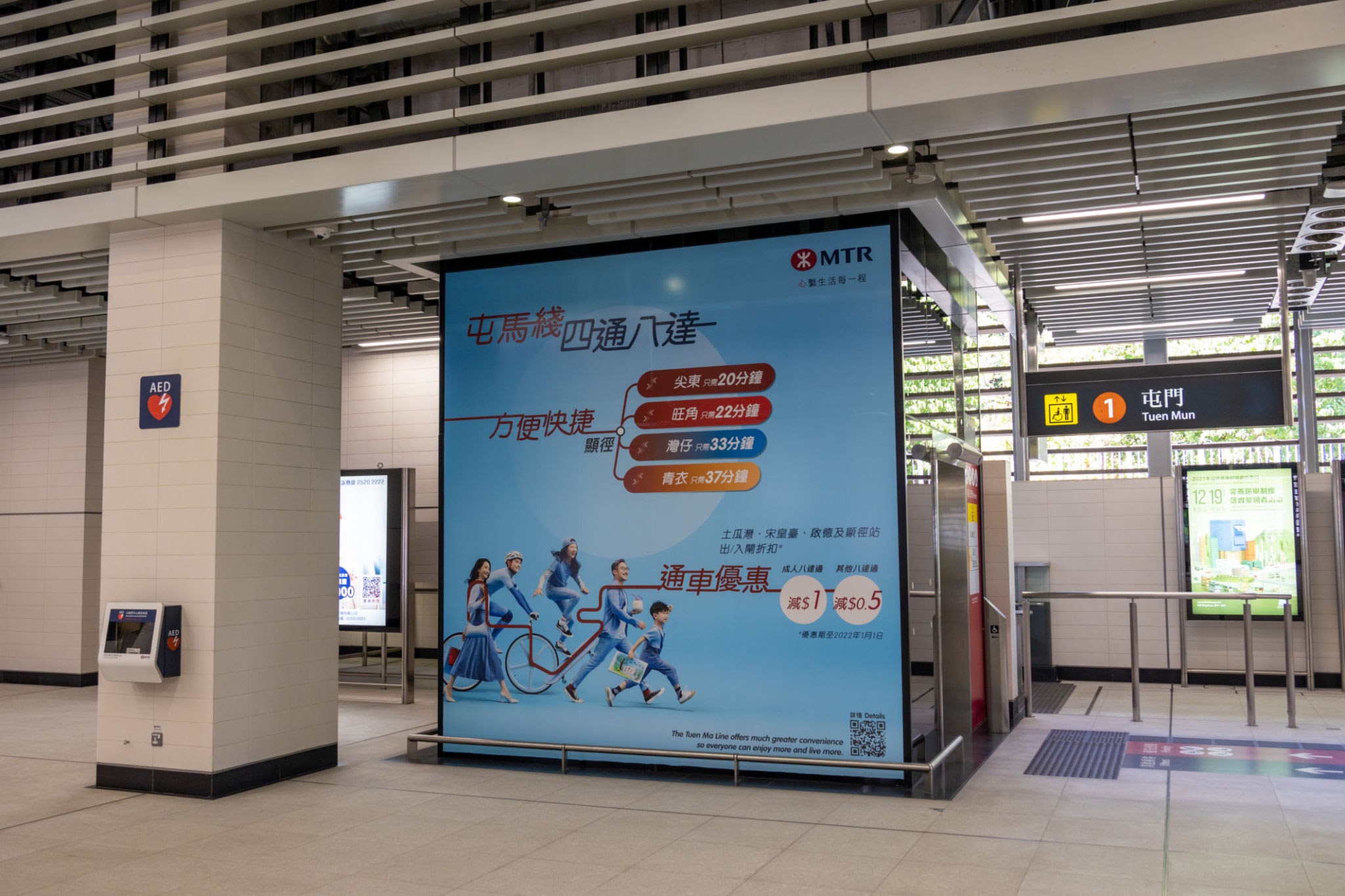
MTR advertising often serves as the benchmark for mass market communication. For safety announcements and corporate branding, they strictly use Standard Written Chinese. This ensures total clarity across all demographics.
Production consequences
Your language choice directly impacts your production budget and timeline. Traditional Chinese characters are visually dense. When planning outdoor media, you must manage your character count strictly to ensure legibility from a distance. Furthermore, ensuring you have the correct font licensing for commercial Traditional Chinese typography is a step you cannot skip.
If you opt for a dual version approach, you will need to account for extra voiceover sessions and varied text layouts. Most importantly, you must brief a transcreator rather than a translator to ensure proper transcreation hong kong style. The one rule that matters is this: write your concepts using Cantonese thinking first, then decide which script to set it in. Never force English thinking into Chinese words.
A decision checklist
Instead of guessing, run your campaign through these six essential questions. Use this matrix to resolve your language strategy before briefing your creative team:
Decision Stage | The Core Question | The Language Strategy |
|---|---|---|
1. Audience | Who is your primary target? |
|
2. Category | What is your product category? |
|
3. Tone | What is the desired brand voice? |
|
4. Placement | Where will the ad live? |
|
5. Concept | Does the creative rely on English wordplay? |
|
6. Budget | Can you afford dual-versioning? |
|
FAQ
1. Should Hong Kong ads be in Cantonese or Mandarin?
If your primary audience is local residents, use Cantonese. If you are targeting tourists from the mainland, use Mandarin.
2. Is Traditional or Simplified Chinese correct for Hong Kong?
Traditional Chinese is the absolute standard for the local market. Simplified Chinese should only be used for specific visitor facing placements.
3. Can I run pure English advertising in Hong Kong?
You can, but it is best reserved for expat services, international corporate campaigns or specific luxury categories. For mass market appeal, bilingual or Chinese only is much more effective.
4. What is written Cantonese and when should I use it in ads?
Written Cantonese is the written form of the spoken street language. It is highly engaging for social media, retail and youth brands, but should be avoided for formal corporate communications.
5. Do I need separate creative for mainland visitors?
Yes. Using Simplified Chinese and Mandarin phrasing is crucial if you want to effectively convert mainland tourist traffic.
6. How much does dual language ad production add to the budget?
It requires dedicated copywriting, separate voiceover recordings and distinct layout adjustments. It is an investment in cultural relevance rather than just a translation fee.






 How to Advertise to Mainland Chinese Visitors in Hong Kong
 Shopping Mall Advertising in Hong Kong: Formats, Footfall and Rates
 WeChat Advertising in Hong Kong: Formats, Costs and How to Set It Up
 Programmatic DOOH in Hong Kong: How It Works and What It Costs
 Cantonese, Mandarin or English: Choosing Your Ad Language in Hong Kong
 Understanding YouTube Advertising Costs in 2025
 The Most Widely-Read Magazine and Newspaper in Hong Kong
 Top Social Media Platforms in Hong Kong 2025 | Usage Trends & Marketing Insights
 OOH /DOOH advertising in Hong Kong: Formats and Rates (2025 Update)
 How much does LinkedIn Advertising Cost? (2025 Update)
