 Cookie preferences


How to Advertise to Mainland Chinese Visitors in Hong Kong
Want to save time?
Summarize this article in seconds with AI
Hong Kong’s retail, F&B, pharmacy, beauty, and jewellery sectors live or die on mainland Chinese visitors. Yet, most local media plans miss them entirely by deploying budgets on platforms this demographic simply does not use. Mainland tourist marketing in Hong Kong requires intercepting consumers across their native digital landscape and physical travel corridors. If you are ready to shift your strategy, explore our Out-of-home media options.
Who the Mainland Visitor Actually is in 2026
Visitor demographics have fractured into distinct segments, each requiring a tailored media approach based on dwell time and basket size:
- Shenzhen Day Trippers: High frequency, low basket shoppers who cross for daily necessities, pharmacy goods, or casual dining. They are highly responsive to immediate geo targeted offers near border towns.
- Weekend GBA Visitors: Greater Bay Area residents seeking weekend getaways, mid tier retail, and cultural events. They respond to weekend itinerary content and district specific mall promotions.
- Long Haul Mainland Tourists: High intent, high basket shoppers arriving from Tier 1 and Tier 2 cities via flight or high speed rail. They research extensively pre trip for luxury goods, insurance, and high end beauty.
- Students & Professional Residents: The growing community of mainland expats in Hong Kong. While technically residents, they rely on mainland social platforms and act as vital local KOCs (Key Opinion Consumers) whose reviews influence arriving tourists.
Stage 1: Reaching Them Before They Cross the Border
The decisive moment happens before a visitor scans their border permit. Mainland tourists plan their itineraries and shopping lists extensively in advance; waiting until they arrive means missing the consideration phase.
- RedNote (Xiaohongshu): The primary search engine for travel and shopping lists. Xiaohongshu tourists in Hong Kong actively search for "must buy lists" and "hidden gem cafes." Content must provide immediate utility, such as store maps or product comparisons. Read the full Xiaohongshu guide to master the platform.
- Douyin: The platform for video first discovery. Best suited for visually striking F&B, interactive retail experiences, and high energy district overviews.
- WeChat Official Accounts: Used for official brand announcements, VIP loyalty programs, and publishing tax exemption policies. For a look at what locals use instead, WeChat remains an unparalleled CRM for mainland consumers.
- Mafengwo & Trip.com: Core itinerary builders where display ads intercept users actively booking hotels and flights. To capture intent via desktop or traditional query, explore search on the mainland side.
Stage 2: The Arrival Corridors
The moment visitors enter Hong Kong, they are funneled through highly concentrated physical corridors. These locations offer unavoidable branding opportunities exactly when intent peaks.
| Format & Location | Owner / Network | Audience Mood | Indicative Cost | Lead Time |
|---|---|---|---|---|
| High Speed Rail West Kowloon Digital spectaculars, pillar wraps | MTR | High intent, premium (long haul tourists, business travelers) | $$ | 4-8 weeks |
| Lo Wu / Lok Ma Chau Lightboxes, digital panels near e-channels | MTR | Fast moving, functional (frequent border crossers) | $ | 2-4 weeks |
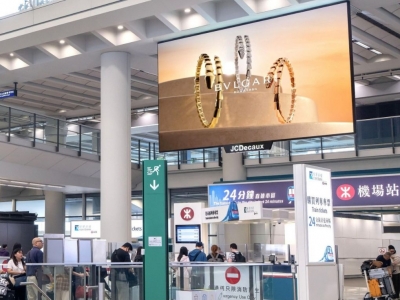
| HKIA Arrivals Baggage claim screens, arrivals hall lightboxes | HKIA | Receptive, high dwell time | $$ | 4-8 weeks |
| Ferry Terminals Walkway panels, waiting lounge screens | Various | Leisure oriented (multi destination travelers) | $ | 2-4 weeks |
Stage 3: In City Touchpoints
Once in the city, mainland visitors navigate differently than locals. They rely on specific transit arteries and retail hubs.
%20(15).jpg)
MTR Advertising: The absolute core of tourist movement. Station dominations in Tsim Sha Tsui, Causeway Bay, and Mong Kok guarantee exposure to high density traffic. Learn more about Transit advertising in Hong Kong and specific MTR advertising formats.
%20(16).jpg)
Mall Media & Street Level LED: Large format digital screens in Harbour City, Times Square, and Sogo Crossing. Mainland consumers associate large outdoor presence with brand legitimacy and scale.
%20(14).jpg)
Taxi and Tram: Moving billboards providing continuous geographic coverage. Trams effectively target tourists exploring the northern corridor of Hong Kong Island.
Ad Copy Language: When designing physical OOH for mainland visitors, utilizing simplified chinese ad copy in Hong Kong reduces cognitive load and signals a direct welcome. However, heavy Simplified Chinese in local residential districts can alienate local consumers.
Stage 4: Payment Rails and Mini Programmes
Mainland tourists bypass Visa and Mastercard in favor of native payment ecosystems, turning transactional apps into high converting advertising networks.
- In App Placements: Both Alipay and WeChat feature location based pop ups and "Discover Hong Kong" pages that trigger when users connect to local networks.
- Merchant Offers: Brands can list exclusive digital coupons or tax refund incentives directly in the apps. Users clip the coupon digitally and auto redeem it upon scanning to pay in store.
- Alipay Mini Programme Advertising: Developing a lightweight mini programme allows merchants to offer order ahead services, digital menus, and loyalty point collection without requiring a standalone app download.
Stage 5: Closing the Loop with Reviews
A mainland visitor's journey concludes by influencing the next wave of tourists. Post trip review seeding on RedNote and Douyin is the ultimate conversion engine.
- Legitimate Seeding: RedNote heavily penalizes inauthentic or artificially boosted reviews. Legitimate seeding involves inviting KOCs to your store, allowing them to take their own photos, and providing product samples in exchange for authentic experiences.
- In Store Posting Incentives: Create photogenic "check in" (daka) spots within your retail space. Offer an immediate, low cost incentive (such as a branded tote or trial product) for users who post a review and tag your location on RedNote or Douyin before leaving the store.
The Calendar That Matters
Mainland marketing is heavily seasonal. OOH inventory and KOC schedules sell out months in advance of major travel periods.
- Chinese New Year (Jan/Feb): Peak family travel and high value gifting. Book by: November.
- Labour Day Golden Week (May 1): Five days of high intensity shopping. Book by: March.
- Summer Holidays (Jul/Aug): Student and family travel, longer dwell times. Book by: May.
- National Day Golden Week (Oct 1): The biggest retail event of the year in Hong Kong. Book by: July.
Submit a media brief to start planning your next cross border campaign.
FAQ
1. Which apps do mainland visitors in Hong Kong actually use?
They rely on RedNote (Xiaohongshu) for discovery, Douyin for entertainment, WeChat for communication, and Alipay or WeChat Pay for transactions.
2. Should ads use Simplified or Traditional Chinese?
For out-of-home ads specifically targeting tourist corridors, use Simplified Chinese to maximize comprehension. In mixed districts, Traditional Chinese is perfectly acceptable, though Simplified Chinese explicitly signals that the brand is directly courting mainland buyers.
3. Can a Hong Kong company advertise on Xiaohongshu and WeChat without a mainland entity?
Yes. Both platforms allow Hong Kong registered companies to open cross border official accounts and run ad campaigns, provided you submit your HK Business Registration and pass their corporate verification processes.
4. Where are the best OOH sites to reach cross border visitors?
High Speed Rail West Kowloon, Lo Wu and Lok Ma Chau MTR border control points, and premium shopping arteries like Canton Road (Tsim Sha Tsui) and Causeway Bay.
5. When should I book around Golden Week?
For the October 1 National Day Golden Week, premium OOH sites and top tier KOLs should be booked by July. Inventory in prime corridors often sells out 8 to 12 weeks in advance.
6. How do I measure whether a mainland visitor campaign worked?
Track coupon redemptions via Alipay/WeChat Pay merchant data, monitor cross border transaction volume via your payment gateway, and measure brand mention spikes on Xiaohongshu using social listening tools.




 How to Advertise to Mainland Chinese Visitors in Hong Kong
 Shopping Mall Advertising in Hong Kong: Formats, Footfall and Rates
 WeChat Advertising in Hong Kong: Formats, Costs and How to Set It Up
 Programmatic DOOH in Hong Kong: How It Works and What It Costs
 Cantonese, Mandarin or English: Choosing Your Ad Language in Hong Kong
 Understanding YouTube Advertising Costs in 2025
 The Most Widely-Read Magazine and Newspaper in Hong Kong
 Top Social Media Platforms in Hong Kong 2025 | Usage Trends & Marketing Insights
 OOH /DOOH advertising in Hong Kong: Formats and Rates (2025 Update)
 How much does LinkedIn Advertising Cost? (2025 Update)
