 Cookie preferences


Shopping Mall Advertising in Hong Kong: Formats, Footfall and Rates
Want to save time?
Summarize this article in seconds with AI
In Hong Kong, a typical weekend doesn't happen on a high street, it happens in a mall. Between the summer heat, seasonal typhoons, and sheer urban density, shopping centres function as the city's gathering areas. For advertisers, this means mall advertising in Hong Kong places your brand right at the final step of the consumer journey.
If you are evaluating What is out-of-home advertising for a retail push, mall media is arguably the most targeted option available. Ready to explore the landscape? Discover our Out-of-home media and Digital out-of-home capabilities to start planning.
The Hong Kong mall landscape
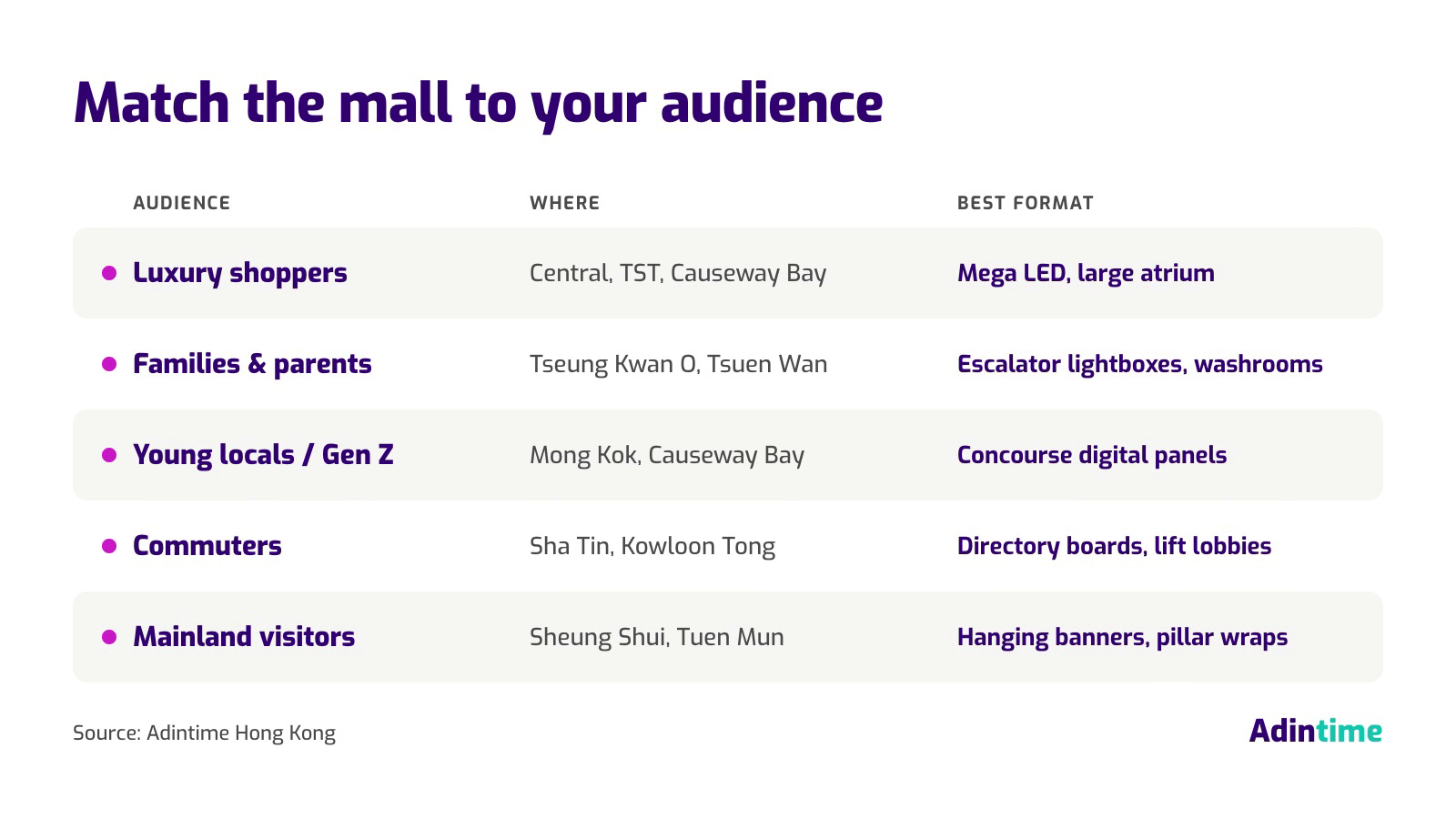
Hong Kong’s retail property market is dominated by a few major developers, each offering a distinct audience skew rather than a generic mass market. Instead of ranking them by sheer square footage, it is more practical to evaluate landlords by the distinct consumer base their portfolios attract:
- Luxury and Tourist Facing: Dominated by Swire Properties (Pacific Place), Wharf (Harbour City, Times Square), and Hysan (Lee Gardens). These spaces skew heavily toward high-net-worth individuals in adjoining offices, and luxury shoppers.
- Commuter Interchange: Malls built directly atop major MTR transit hubs, such as Sun Hung Kai Properties (SHKP)’s New Town Plaza or MTR Corporation’s Elements and Telford Plaza. They capture massive daily foot traffic driven by sheer convenience and transit necessity.
- Mass Market Neighbourhood: Dominant in districts like Tseung Kwan O, Tsuen Wan, and Wong Tai Sin. Link REIT and localized SHKP properties serve these zones, capturing highly repetitive, daily family footfall driven by supermarkets, local dining, and lifestyle services.
- Cross Border: Located in the Northern Metropolis like Sheung Shui (Landmark North) and Tuen Mun (V City), these malls see heavy traffic from day tripping mainland consumers stocking up on cosmetics, pharmaceuticals, and daily necessities.
The formats, one by one
Atrium and activation space
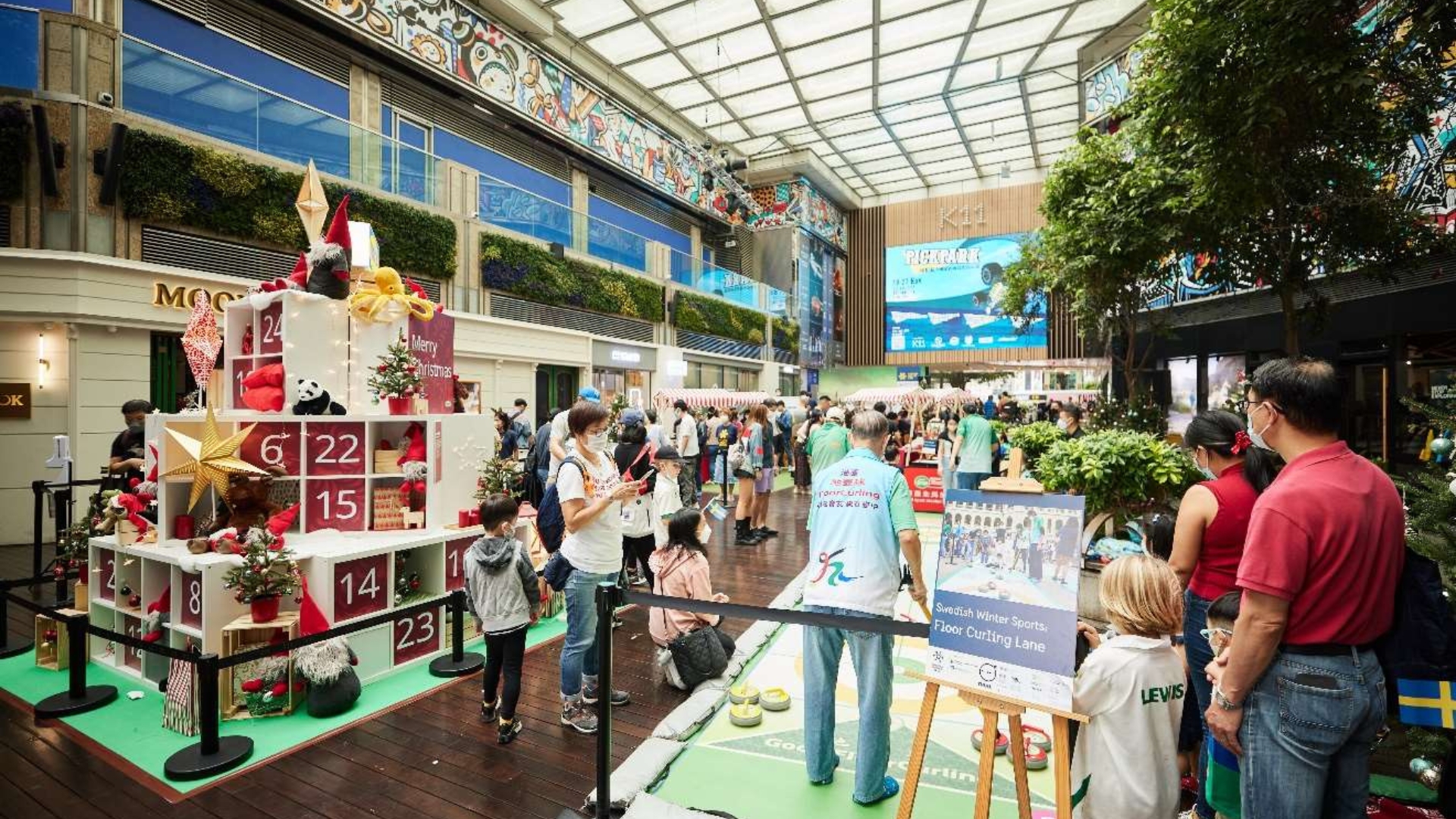
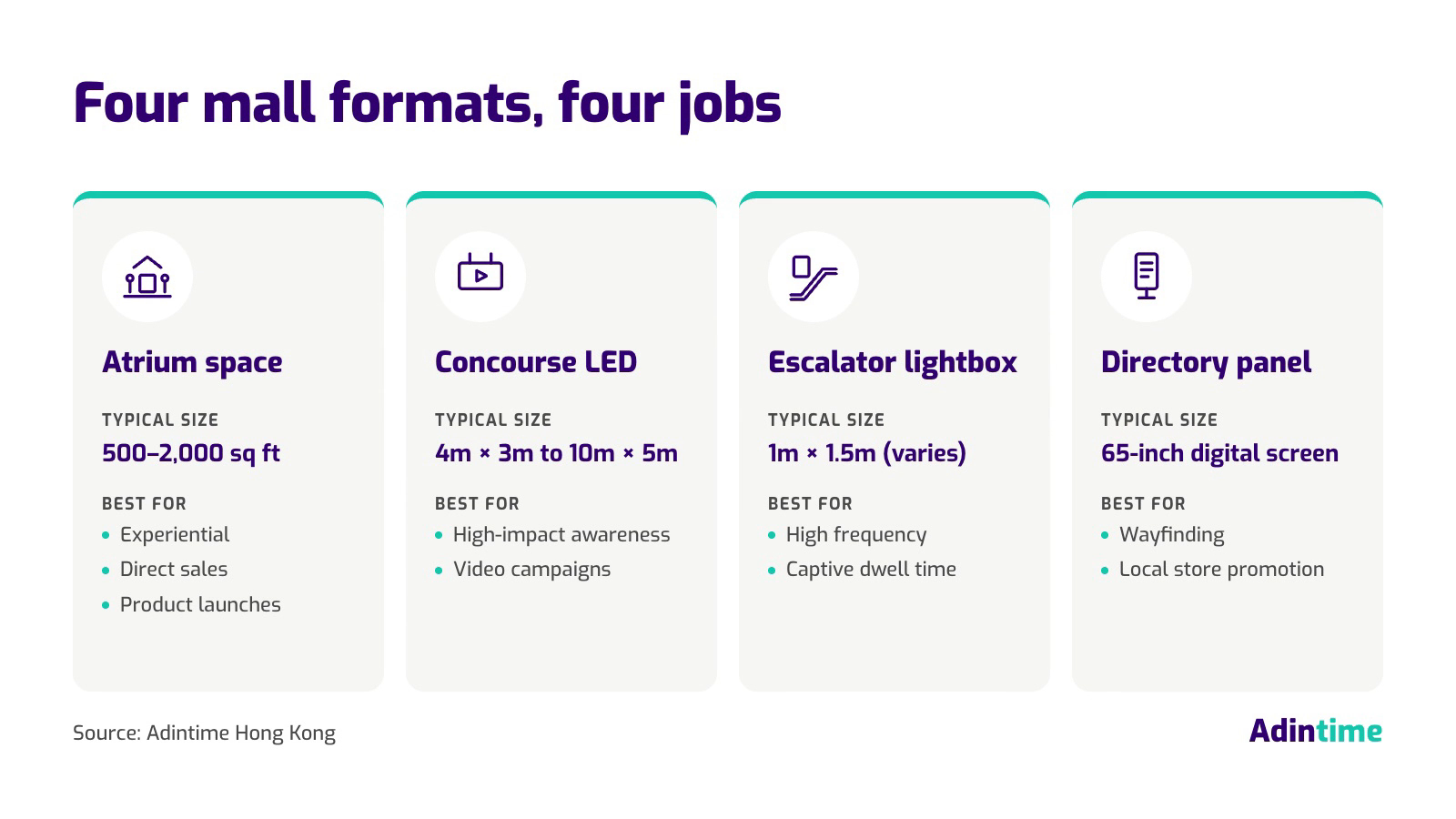
The atrium is the premium buy of mall media. It serves as the physical centrepiece for pop ups, brand activations, and large scale installations. This is the heart of event advertising; it demands a custom build, staffing, and significant investment, but delivers unmatched brand immersion and direct sales opportunities.
Concourse and hanging LED
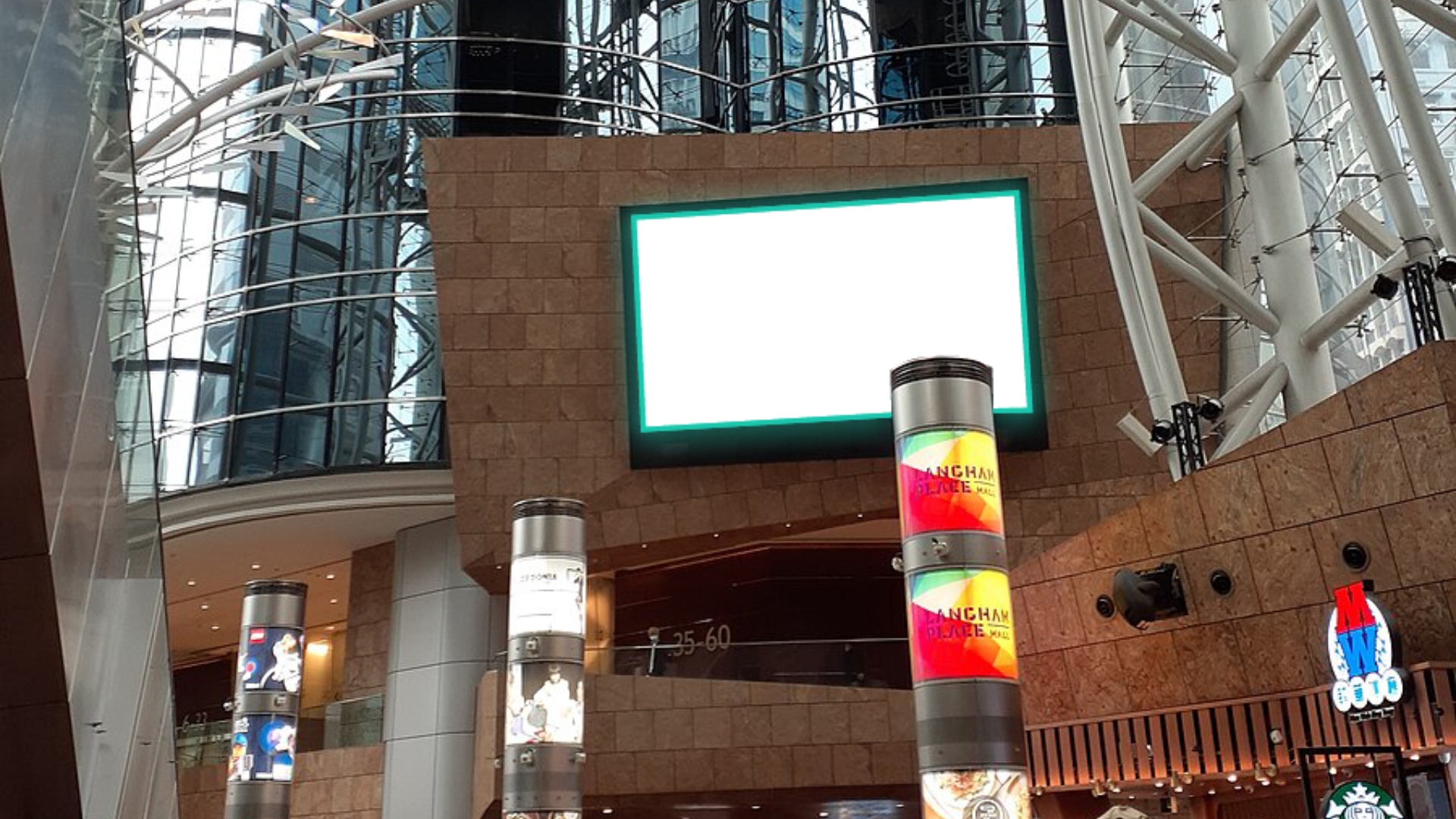
Large format digital screens suspended in main thoroughfares or wrapped around pillars. They offer high impact video capability. Evaluating mall led screen rates typically involves looking at 10 to 15 seconds spots in a 2 to 3 minute loop, ideal for upper funnel brand awareness.
Escalator and travelator lightboxes
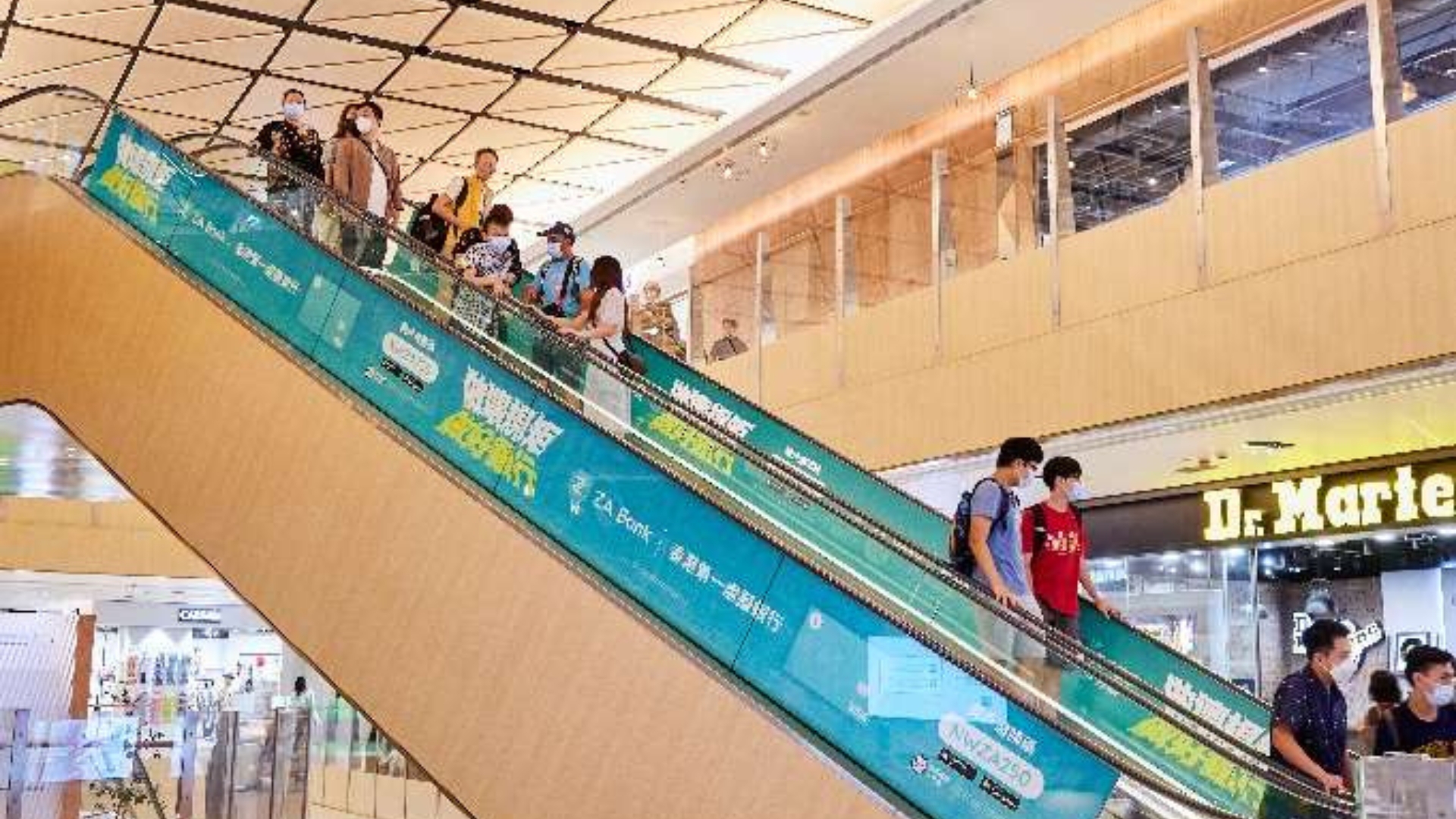
The frequency workhorse of the mall. Because shoppers are physically captive on an escalator for 15 to 30 seconds, escalator lightbox advertising delivers guaranteed, prolonged views. They are highly cost effective per impression and excellent for sequential storytelling or reinforcing mass market messaging.
Directory and wayfinding panels
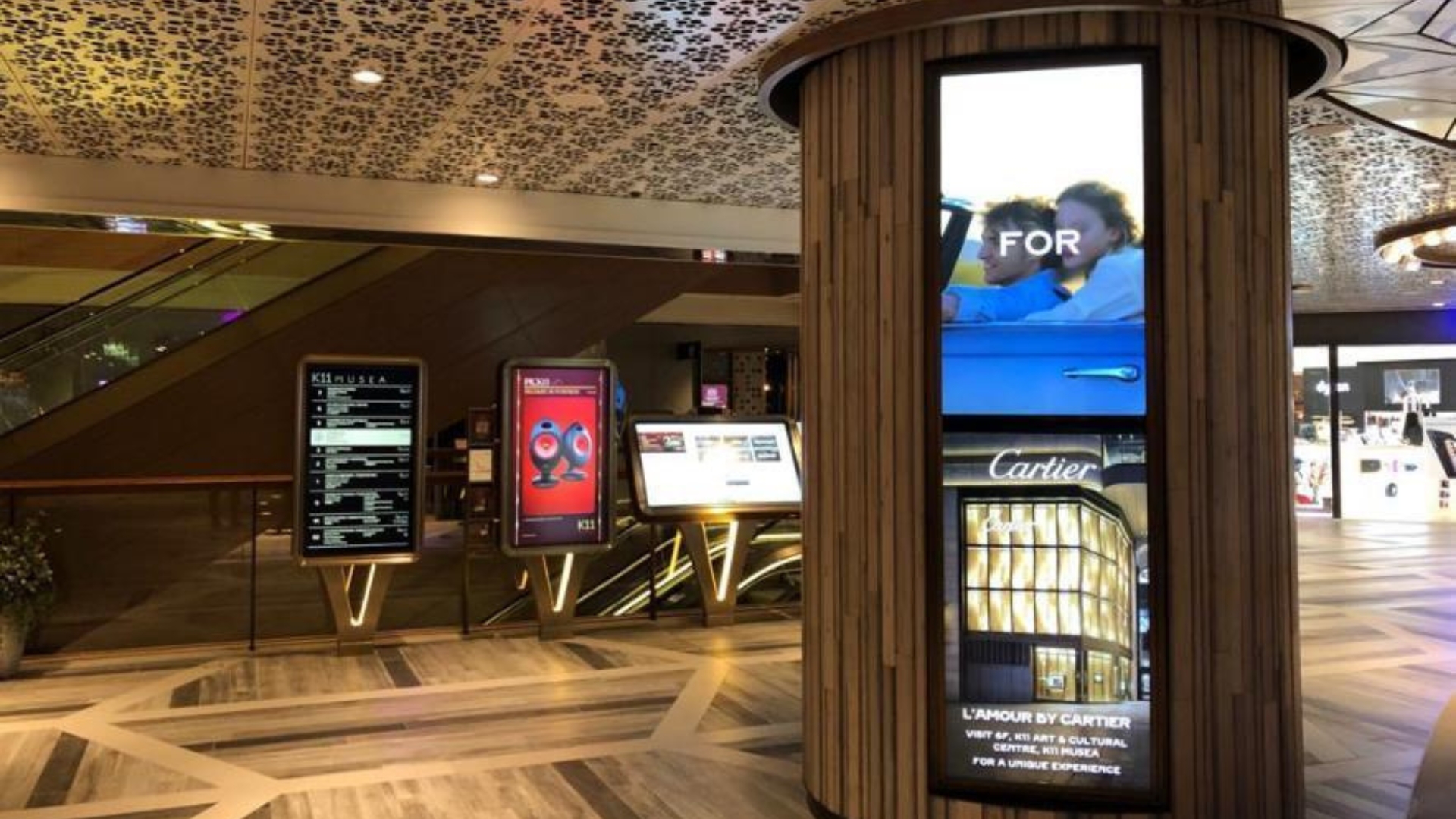
Located at key decision points, digital and static directory panels intercept shoppers actively deciding where to go next. They are highly effective for directional messaging (e.g., "Find us on Level 3") and immediate footfall driving.
Master Table: Mall Advertising Formats
Footfall: what the numbers mean and what they hide
When evaluating a mall, you will inevitably be handed massive footfall figures from landlord media kits. A figure of "3 million visitors per month" sounds impressive, but requires careful discounting to estimate your real audience.
Landlords count physical entries (often via infrared sensors at doors or WiFi tracking). This headline number includes:
- Staff: Thousands of retail workers entering and exiting daily.
- Pass through traffic: Commuters using the air conditioned mall as a shortcut to the MTR without stopping to shop.
- Repeat local visits: A resident living above the mall might enter 10 times a week.
To calculate true unique reach, media planners heavily discount the gross footfall. A strategic campaign values dwell time over pure entry counts, focusing on central concourse traffic rather than peripheral transit exits.
Matching the mall to your audience
Rates and what drives them
Shopping centre advertising cost is not uniform; it fluctuates based on several predictable levers:
- Micro location: A screen facing a supermarket or a popular cinema commands a premium over one situated in a quiet, high fashion corridor.
- Seasonality: Expect heavy rate premiums and zero flexibility during Q4 (Christmas) and Q1 (Chinese New Year).
- Duration and volume: Landlords heavily incentivize longer bookings (e.g., 12 weeks or annual contracts) and portfolio buys (booking across three of a landlord's properties simultaneously) with aggressive discounting.
Lead times and the booking calendar
Mall media requires earlier planning than street level billboards.
For standard static panels and digital screens, 4 to 6 weeks lead time is standard. However, for premium Atrium spaces, the calendar is fierce. Chinese New Year and Christmas slots are often locked in by August or September of the preceding year. If you are planning experiential activations, integrate these deadlines into your free marketing calendar to avoid missing out on peak retail seasons.
Measuring mall campaigns
While OOH cannot offer the exact metrics of digital, mall campaigns have distinct measurement advantages due to their proximity to the store.
- Footfall Uplift: By tracking baseline store traffic against traffic during the campaign period (using in store sensors).
- Promo Code Redemption: Using mall specific QR codes or exclusive discount codes displayed only on the mall panels.
- Sales Baselines: Comparing week on week revenue for the specific branch located in the advertised mall against non advertised branches.
Ready to capture Hong Kong's retail audience? Submit a media brief today and our team will build a tailored mall strategy for your next campaign.
FAQ
1. Which mall formats work best for a retail brand?
If you have a physical store in the mall, directory panels and escalator lightboxes leading to your floor are unparalleled for immediate footfall. If you want brand prestige, concourse LEDs provide the best canvas.
2. How far in advance do I book atrium space for Chinese New Year?
At least 5 to 6 months in advance. The most desirable atrium spaces for CNY (January/February) are frequently booked out by August.
3. How is mall footfall measured?
Landlords typically use infrared door sensors or WiFi beacon tracking to count total entries. Keep in mind that these are gross figures, meaning they include retail staff and repeat daily visitors.
4. Can I advertise in a mall if I have no store there?
Yes, most landlords accept non tenant advertisers, particularly FMCG, automotive, and financial brands. However, some landlords may restrict direct competitors of their most important anchor tenants.
5. Mall media or MTR advertising — which is better?
MTR advertising provides unmatched city wide reach and commuter volume. Mall media provides a highly targeted, relaxed, purchase ready mindset. If you want absolute scale, look into the transit alternative. If you want proximity to the cash register, stick to the mall.


 Shopping Mall Advertising in Hong Kong: Formats, Footfall and Rates
 WeChat Advertising in Hong Kong: Formats, Costs and How to Set It Up
 Programmatic DOOH in Hong Kong: How It Works and What It Costs
 Cantonese, Mandarin or English: Choosing Your Ad Language in Hong Kong
 AI in Advertising: Ethics, Deepfakes and Regulation in Hong Kong
 Understanding YouTube Advertising Costs in 2025
 The Most Widely-Read Magazine and Newspaper in Hong Kong
 Top Social Media Platforms in Hong Kong 2025 | Usage Trends & Marketing Insights
 OOH /DOOH advertising in Hong Kong: Formats and Rates (2025 Update)
 How much does LinkedIn Advertising Cost? (2025 Update)
