 Cookie preferences


Media comparison: MTR vs bus campaign cost in Hong Kong (2026)
Want to save time?
Summarize this article in seconds with AI
MTR and bus advertising are the two most booked OOH formats in Hong Kong. But comparing them is not as straightforward as looking at average campaign costs, the format mix, station selection, route choice and duration all shift the equation considerably.
This article breaks down the real 2026 cost data for both formats, format by format, so you can make the comparison with actual numbers rather than general impressions.
Explore MTR and bus advertising on Adintime HK
Table of contents
- MTR vs bus advertising: a quick overview
- MTR advertising costs in 2026
- Bus advertising costs in 2026
- Side-by-side cost comparison
- Audience and reach: what the numbers say
- Cost per impression: which delivers better value?
- When to use MTR, when to use bus
- Running both: how to split your budget
- MTR vs Bus Advertising: Quick Comparison Table
- FAQ
MTR vs bus advertising
MTR advertising is the go-to format for reaching a captive urban audience. With 4.9 million daily passengers across 100+ stations and 11 lines, the MTR provides consistent, controlled environments where dwell time is high and distraction is low. MTR holds a 27.5% share of all OOH campaigns booked on Adintime HK (Adintime HK data, 2025).
Bus advertising works differently. Hong Kong's fleet of approximately 6,000 buses across 400+ routes (KMB and Citybus combined) turns your creative into a mobile billboard that moves through residential areas, commercial districts and everything in between.
The average campaign cost tells part of the story: MTR averages HK$160,000, bus averages HK$83,000 (Adintime HK data, 2026). But the averages obscure a wide range of formats at very different price points.
For a broader context on how these two formats compare on non-cost dimensions, the Adintime HK guide to bus vs MTR advertising covers audience profiles, creative requirements and campaign objectives in detail.
MTR advertising costs in 2026
MTR advertising breaks down into two main environments: in-station and in-train. Each has its own format hierarchy and pricing logic.
In-station formats
Station lightboxes are the entry point, 12-Sheet and 4-Sheet panels in station concourses. A single 12-Sheet lightbox at a standard station runs HK$15,000–32,000 for two weeks. A 4-Sheet runs HK$8,000–18,000.
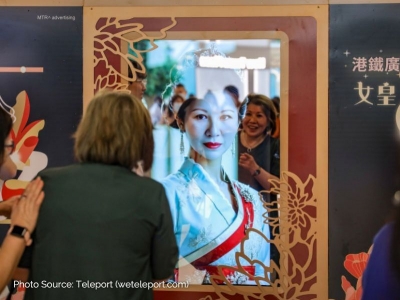
The Digital Escalator Crown Bank, digital screens along escalator runs creating an immersive visual tunnel, runs HK$40,000–120,000 for two weeks depending on station and screen count. The Motion Zone (large format LED panels in concourses capable of animated content) sits at HK$120,000–250,000 per two weeks. Pillar wraps at major interchange stations (Admiralty, Mong Kok, Tsim Sha Tsui) cost HK$150,000–300,000.
At the top of the in-station range, a Full Station Takeover, combining wraps, pillar branding, digital screens, floor vinyl and turnstile branding, starts at HK$300,000 and can exceed HK$500,000 for premium locations.
Premium station uplift: Central, Admiralty, Hong Kong Station, Causeway Bay, Mong Kok and Tsim Sha Tsui stations attract a 20–40% cost premium over standard stations.
%20(4).jpg)
In-train formats
Tube Cards (carriage panel posters) run HK$30,000–80,000 per four weeks. In-Train TV costs HK$80,000–180,000 per four weeks. A Full Train Wrap (exterior and interior) runs HK$200,000–400,000+ per four weeks.
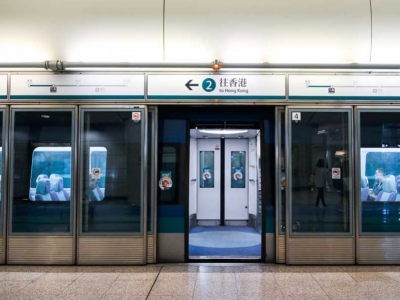
In-train formats deliver high dwell time during actual journeys, passengers sit or stand for 5–25 minutes with limited other things to look at.
Full MTR advertising formats and current availability are on Adintime HK.
%20(5).jpg)
Bus advertising costs in 2026
Bus advertising's major advantage is its entry point. A partial body panel on a single bus runs HK$3,500–15,000 per four weeks, an accessible starting point that MTR simply does not offer.
Exterior bus formats
Partial body placements run HK$3,500–46,000+ per bus per four weeks depending on format and placement size. A full Whole Bus body wrap costs HK$36,000–70,000 per four weeks. The Super Whole Bus format, covering the full exterior of a double decker in one branded livery, is the flagship bus advertising product.
%20(8).jpg)
Interior bus formats
Interior placements (seat backs, ceiling panels, handrail branding, window clings) run HK$2,000–25,000 per bus per four weeks. They work well as an add on to an exterior campaign.
%20(7).jpg)
Bus shelter advertising
Standard shelter panels run HK$3,000–150,000+ per four weeks depending on location and format. Digital bus shelter screens at premium locations (Causeway Bay, TST, Central) can exceed HK$200,000 per two weeks.
Full bus advertising options and route availability are on Adintime HK.
%20(6).jpg)
Side by side cost comparison
| Format | Duration | Cost Range (HKD) | Notes |
|---|---|---|---|
MTR 12-Sheet Lightbox | 2 weeks | 15,000 – 32,000 | Per panel; premium stations +20–40% |
MTR 4-Sheet Lightbox | 2 weeks | 8,000 – 18,000 | Per panel |
MTR Digital Escalator Crown | 2 weeks | 40,000 – 120,000 | Per bank of screens |
MTR Motion Zone | 2 weeks | 120,000 – 250,000 | Large LED concourse display |
MTR Pillar Wrap | 2 weeks | 150,000 – 300,000 | Major interchange stations |
MTR In-Train TV (network) | 4 weeks | 80,000 – 180,000 | Carriage screens |
MTR Full Station Takeover | 2–4 weeks | 300,000 – 500,000+ | Premium locations |
BUS Partial Body Panel | 4 weeks | 3,500 – 15,000 | Per bus; format/size varies |
BUS Whole Bus / Super Whole Bus | 4 weeks | 36,000 – 70,000 | Per bus; single or double deck |
BUS Interior (seatback, ceiling) | 4 weeks | 2,000 – 25,000 | Per bus |
BUS Shelter (standard) | 4 weeks | 3,000 – 150,000 | Highly location dependent |
BUS Shelter Digital (premium) | 2 weeks | 200,000+ | Causeway Bay, TST, Central |
All figures are media cost only. Production is additional. Chinese New Year and Golden Week attract seasonal premiums of 15–30%.
Audience and reach: what the numbers say
The MTR's daily passenger count of 4.9 million is impressive, but station level figures matter more for most advertisers. Central handles over 500,000 daily passenger movements; Mong Kok and Causeway Bay are not far behind. The MTR audience skews toward Hong Kong's working population, with 39% of MTR commuters holding a degree level qualification (MTR data), the network over indexes on urban professionals.
Buses reach 3.9 million daily passengers plus an uncounted number of pedestrians who see bus body advertising at street level. The demographic spread is broader, buses cover residential estates and commercial districts that the MTR does not serve directly.
Cost per impression: which delivers better value?
MTR impressions happen indoors, in a controlled environment with high dwell time and limited visual competition. Passengers waiting on platforms or riding between stations have very little else to engage with. The impression quality, attention and recall is high.
Bus body advertising impressions include everyone who sees a bus pass, drivers, pedestrians, shoppers. Dwell time is often zero for pedestrians and a few seconds for road users. Volume is high; quality per impression is lower. A well-designed Super Whole Bus creative repeated across multiple routes creates strong brand recall through sheer frequency and street level visibility.
A campaign objective (awareness versus premium brand building versus local activation) is a better guide to format choice than a raw CPM calculation.
When to use MTR, when to use bus
MTR works best when you need concentrated reach to a specific audience at specific geographic nodes. Brand launches targeting urban professionals, luxury or finance products, technology or app launches, these translate well to MTR's captive environments.
Bus works best for geographic breadth and mass market reach. District specific campaigns targeting a residential area or commercial district benefit from route targeting logic. For FMCG, retail, entertainment and lifestyle brands, bus body visibility plus bus shelter panels create sustained multi touchpoint exposure.
Budget is also a real constraint. Below HK$80,000: bus is the practical choice. Above HK$150,000: MTR opens significant format options including the Digital Escalator Crown and Motion Zone.
For SME specific guidance on allocating an OOH budget, the Adintime HK SME OOH guide covers practical budget scenarios across all major formats.
Running both: how to split your budget
Many Hong Kong advertisers run MTR and bus in the same campaign. A typical split for a HK$250,000 combined campaign: HK$160,000 on MTR (Digital Escalator Crown at two key stations) and HK$90,000 on bus (two Super Whole Bus wraps on high traffic routes). The MTR creates the concentrated brand environment; the bus extends geographic reach outside the station.
Seasonal timing affects both formats. Chinese New Year (January-February) and Golden Week (October) attract 15–30% premiums. Book 2–3 months ahead for campaigns timed around these periods. The Adintime HK outdoor advertising cost report includes seasonality data to help plan budget timing.
Production costs are additional to all figures quoted, typically HK$5,000–20,000 for static lightboxes or bus panels, higher for full wraps or complex MTR station installations.
Submit a brief on Adintime HK to get MTR and bus options matched to your budget and objectives
MTR vs Bus Advertising: Quick Comparison
| Criteria | MTR Advertising | Bus Advertising |
|---|---|---|
| Average Campaign Cost | HK$160,000 | HK$83,000 |
| Entry Level Budget | From HK$15,000 | From HK$3,500 |
| Campaign Duration | Usually 2–4 weeks | Usually 4 weeks |
| Daily Audience | 4.9 million passengers | 3.9 million passengers + pedestrians |
| Coverage | Concentrated around stations and transport hubs | Citywide and district level coverage |
| Audience Profile | Urban professionals, commuters, office workers | Broad mass market audience |
| Visibility Environment | Captive indoor environment | Mobile outdoor visibility |
| Dwell Time | High | Low to medium |
| Geographic Targeting | Station specific | Route and district specific |
| Brand Impact | High impact premium environment | High frequency and street level exposure |
| Flexibility | Moderate | High |
| Best For | Brand launches, finance, luxury, tech, corporate campaigns | Retail, FMCG, entertainment, local businesses |
| Budget Under HK$80,000 | Limited options | Strong coverage available |
| Budget Above HK$150,000 | Access to premium formats and station takeovers | Multi route domination campaigns |
| Main Advantage | High attention and recall | Lower cost and broader geographic reach |
| Main Limitation | Higher entry cost | Less captive audience |
Recommended Format
| If your objective is... | Recommended Format |
|---|---|
| Maximise visibility on a limited budget | Bus Advertising |
| Reach office workers and urban professionals | MTR Advertising |
| Build premium brand perception | MTR Advertising |
| Cover multiple districts across Hong Kong | Bus Advertising |
| Generate high frequency and repeated exposure | Bus Advertising |
| Launch a major brand campaign | MTR Advertising |
| Balance reach and impact | Combine MTR + Bus |
- MTR: best for urban professional audiences, brand launches, high dwell captive environments
- Bus: best for mass market reach, district level targeting, budget conscious campaigns
- Many HK advertisers run both simultaneously, buses for geographic breadth, MTR for concentrated impact
- Budget below HK$80,000: bus is the practical choice; above HK$150,000: MTR opens significant options
FAQ
1. What is the average cost of MTR advertising in Hong Kong in 2026?
The average MTR advertising campaign costs approximately HK$160,000 (Adintime HK data, 2026). Entry level formats start at HK$15,000 for a 2 weeks station lightbox; full station takeovers at premium stations exceed HK$500,000.
2. What is the average cost of bus advertising in Hong Kong in 2026?
The average bus advertising campaign costs approximately HK$83,000 (Adintime HK data, 2026). Entry level placements start at HK$3,500 for a partial body panel; a Super Whole Bus wrap runs HK$36,000–70,000 per bus per four weeks.
3. Is MTR advertising more expensive than bus advertising?
On average, yes. MTR campaigns average HK$160,000 versus HK$83,000 for bus. However, a premium bus shelter digital panel in Causeway Bay (HK$200,000+) can exceed many MTR placements, and bus entry level is significantly cheaper than any MTR format.
4. Which format delivers better reach: MTR or bus?
MTR reaches 4.9 million daily passengers across 100+ stations; bus reaches 3.9 million daily passengers plus pedestrians via 6,000+ buses on 400+ routes. MTR provides more concentrated, captive reach; bus provides broader geographic coverage and street level visibility.
5. Do MTR and bus advertising costs change seasonally?
Yes. Chinese New Year (January-February) and Golden Week (October) attract premiums of 15–30% on premium placements. Book 2–3 months in advance for campaigns timed around major seasonal peaks.
6. What is included in MTR and bus advertising costs?
The figures above are media costs only. Production (design, printing, vinyl wrap) is additional, typically HK$5,000–20,000 per format depending on complexity.
7. How do I book MTR or bus advertising in Hong Kong?
You can browse available formats, get indicative pricing and submit a campaign brief through Adintime HK, which aggregates inventory from MTR media owners and bus operators (KMB, Citybus) in one place. For a detailed current breakdown of all OOH formats by cost, see the Adintime HK OOH cost guide.

 How to Advertise to Mainland Chinese Visitors in Hong Kong
 Shopping Mall Advertising in Hong Kong: Formats, Footfall and Rates
 WeChat Advertising in Hong Kong: Formats, Costs and How to Set It Up
 Programmatic DOOH in Hong Kong: How It Works and What It Costs
 Cantonese, Mandarin or English: Choosing Your Ad Language in Hong Kong
 Understanding YouTube Advertising Costs in 2025
 The Most Widely-Read Magazine and Newspaper in Hong Kong
 Top Social Media Platforms in Hong Kong 2025 | Usage Trends & Marketing Insights
 OOH /DOOH advertising in Hong Kong: Formats and Rates (2025 Update)
 How much does LinkedIn Advertising Cost? (2025 Update)
